

How the Iran Conflict Is Reshaping the Construction Industry
A Global Shock with Local Consequences
At the centre of the disruption is the Strait of Hormuz, a critical shipping route responsible for roughly 20% of global oil and gas flows. Ongoing instability has caused shipping delays, higher insurance costs, and rerouted vessels, factors that directly increase the cost of transporting raw materials such as iron ore and coking coal.
Energy prices have surged as a result. In major global markets, wholesale gas prices have nearly doubled, pushing up production costs for energy-intensive industries like steel manufacturing. This trend is global, and South Africa, already grappling with high electricity tariffs and logistical inefficiencies, is particularly exposed.
Economists warn that the conflict could increase fuel prices, raise transport costs, and push inflation above target in South Africa. These macroeconomic pressures inevitably feed into the price of steel, a commodity deeply dependent on both energy and transport.
Steel Prices Under Pressure
Steel production is highly energy-intensive, meaning rising oil and gas prices translate directly into higher production costs. Analysts have already highlighted that the Iran conflict presents clear inflationary risks for steel prices, particularly as energy and raw material costs climb.
Freight costs are also escalating. Shipping routes diverted around the Cape of Good Hope add significant travel time, increasing fuel consumption and logistics expenses. These delays reduce supply efficiency and tighten global availability, further pushing prices upward.
At the same time, insurance premiums for maritime transport have surged dramatically, adding another layer of cost to already strained supply chains.
South Africa’s Unique Vulnerability
South Africa’s steel industry is particularly sensitive to global shocks due to its structural challenges. The country relies heavily on imports for certain steel products, making it vulnerable to global price fluctuations and supply disruptions.
To protect local producers, the government has introduced steep anti-dumping tariffs on imported steel. While these measures aim to support domestic manufacturing, they also reduce access to cheaper imported steel, effectively raising input costs for the construction sector.
Compounding the issue is the fragile state of local production. Key manufacturers have scaled back operations in recent years due to weak demand, high electricity costs, and intense import competition. This limits the country’s ability to offset global price increases with local supply.
Impact on the Steel Construction Industry
For construction firms, rising steel prices are not an abstract concern; they directly affect project viability, timelines, and profitability.
- Escalating Project Costs
Steel is a core material in infrastructure, commercial buildings, and industrial developments. As prices rise, contractors face immediate cost overruns. Fixed-price contracts become particularly risky, squeezing margins and, in some cases, rendering projects financially unviable. - Delays and Project Cancellations
Higher input costs often lead to project delays as developers reassess budgets or seek additional financing. In some cases, projects are postponed or scaled down entirely. - Reduced Investment Activity
Uncertainty around material costs discourages new investment. South Africa’s construction sector, already under pressure, faces further slowdown as developers adopt a more cautious approach. - Pressure on Smaller Contractors
Smaller firms are the most vulnerable. Without the financial buffers of larger companies, they struggle to absorb sudden price increases or renegotiate contracts, increasing the risk of closures and job losses.
Implications for Steel Engineering Companies
The impact extends beyond construction firms to all steel engineering companies across South Africa. Fabricators, designers, and project engineers are facing a tightening environment where cost estimation has become increasingly complex and risk heavy.
Price volatility makes it difficult to commit to long-term contracts, while clients are simultaneously pushing for cost certainty. This creates a tension between maintaining competitiveness and protecting already thin margins. Procurement strategies have had to evolve rapidly, with companies seeking alternative suppliers, optimizing material usage, and improving operational efficiency.
Industry Response: Holding the Line on Costs
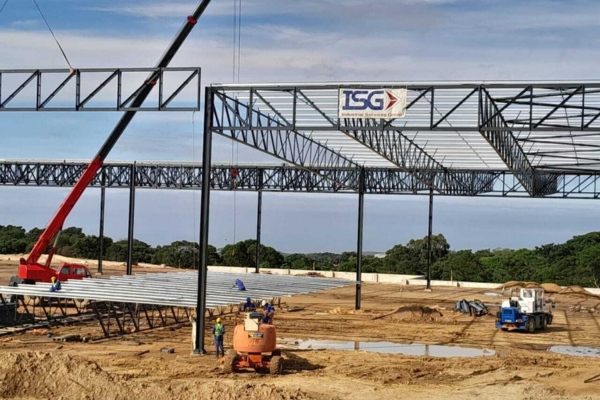
Despite these challenges, leading companies in the sector are actively working to mitigate the impact. ISG, along with other industry players, is focused on maintaining cost stability for clients while navigating rising input prices.
This includes tighter project management, strategic sourcing, and a strong emphasis on efficiency across the value chain. By leveraging experience and disciplined planning, ISG is helping to absorb some of the volatility and deliver projects with greater cost predictability.
Efforts like these are critical in sustaining confidence within the construction sector and ensuring that projects continue to move forward, even under difficult economic conditions.
Conclusion
Despite a challenging global landscape, ISG continues to demonstrate strong leadership and resilience within South Africa’s steel engineering sector. By maintaining disciplined cost control, strengthening supplier relationships, and focusing on efficient project execution, ISG is successfully navigating rising steel prices while continuing to deliver value to clients.
Rather than allowing volatility to dictate outcomes, the company is proactively adapting, finding smarter ways to design, procure, and build. This approach not only protects project viability but also reinforces trust with clients during uncertain times.
In an environment defined by disruption, ISG’s ability to remain steady, solutions-driven, and forward-looking highlights what is possible within the industry. It is a clear example that, even amid global challenges, strong operational strategy and commitment to excellence can continue to drive progress and stability.